Evolution, open-endedness, and the bitter lesson
I recently had a fun weekend project accepted as a workshop paper at the NeurIPS Creativity and Design Workshop.
The idea was simple:
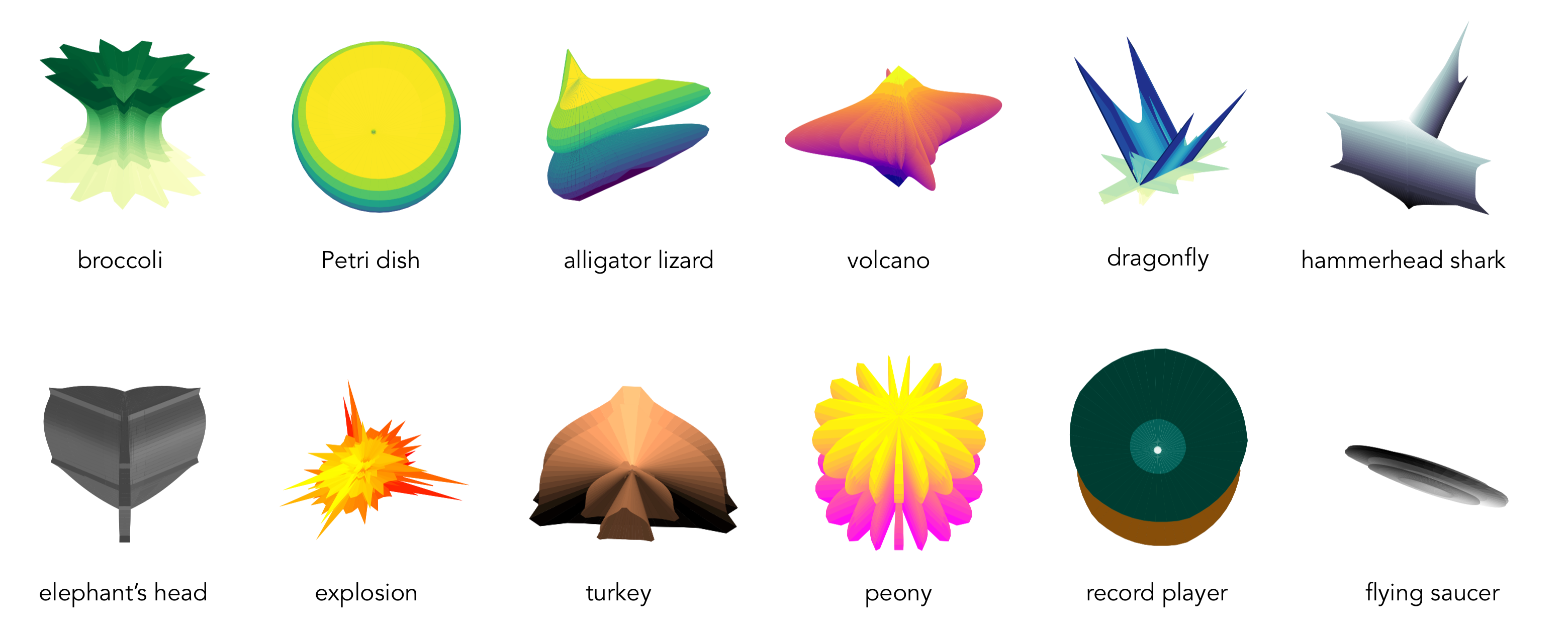
- Parameterize a 3D object using the superformula.
- Use a genetic algorithm to optimize the 12 params for the superformula, plus 3 extra params that control the viewing angle of the 2D rendered image. This evolution is guided by how CLIP scores the image against a target text caption.
In recent years, Richard Suttons' Bitter Lesson has started becoming a recurring guide for many. This is typically discussed in the context of deep learning architectures, but of course his commentary is more general than that.
One class of methods that scale with computation, and utilize both search and learning, is open-endedness. I think the AI field will revisit this in the future, but next time with deep learning and language models.